


Fertility Support and Conception Advice in London: Private Clinic Services and Expert Guidance
Fertility support and conception advice combine clinical assessment, diagnostic testing and personalised counselling to help individuals and couples plan for pregnancy and address barriers to conception. This article explains the core services available through private clinics in London — from a Fertility MOT and ovarian reserve testing to ultrasound services, male factor screening and pathway options such as IUI, IVF and egg freezing. Readers will learn what each diagnostic test measures, when to seek preconception counselling, how common conditions such as PCOS and endometriosis affect fertility, and how early pregnancy care and scans fit into an integrated fertility pathway. Practical sections cover the role of lifestyle optimisation and when assisted reproductive technologies are indicated, while comparative tables help translate test results and treatment options into clear next steps. Throughout, guidance is patient-focused and clinic-agnostic, with signposts to private assessment and booking options available in central London for those who want faster access to investigations and personalised care.
What Fertility Assessments and Diagnostic Services Are Available in London?
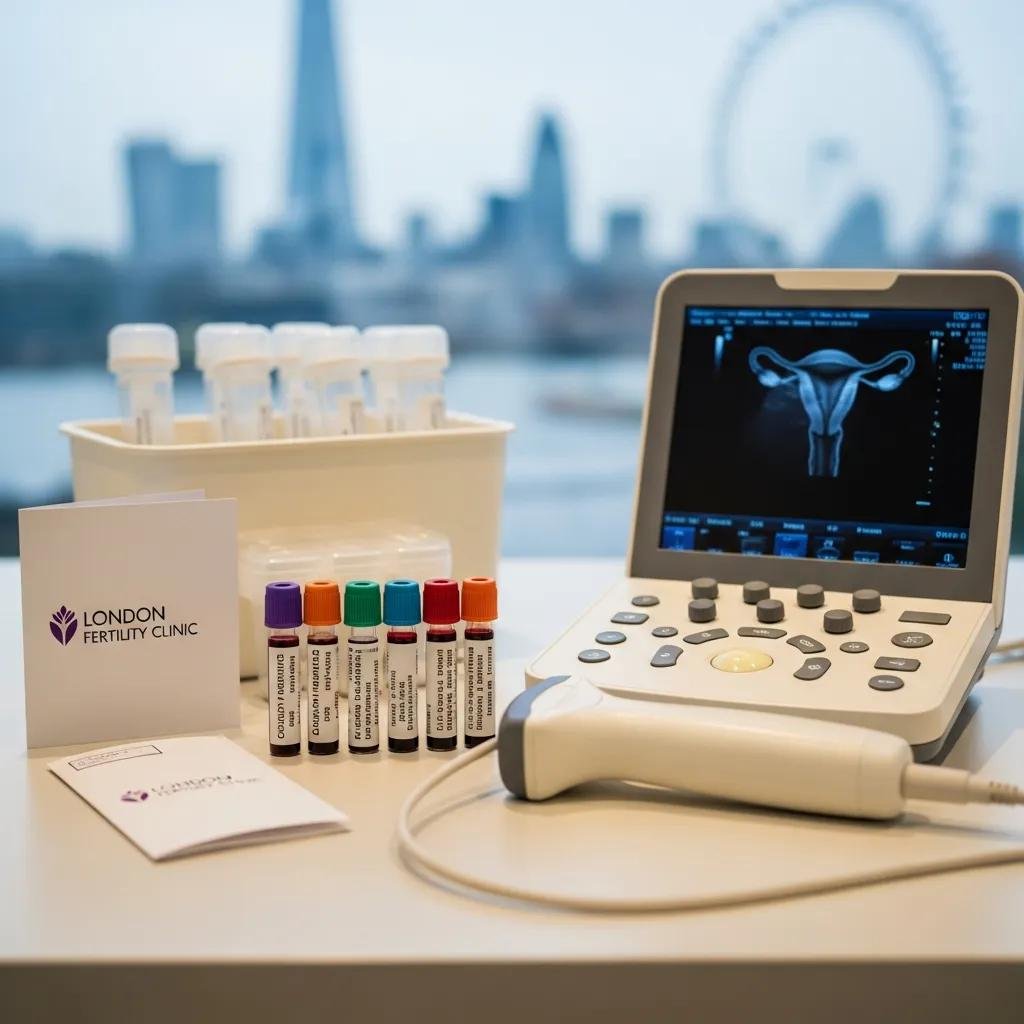
A structured fertility assessment typically begins with a Fertility MOT comprising a medical and reproductive history, baseline hormone profile and targeted tests to identify reversible causes or need for referral. These investigations provide mechanistic insight — ovarian reserve tests estimate egg quantity, semen analysis evaluates sperm quality, and imaging such as transvaginal ultrasound examines pelvic anatomy — allowing clinicians to stratify patients for conservative management or assisted reproduction. Early testing shortens time-to-treatment for people at higher risk of diminished reserve or age-related decline, improving planning and outcomes. Understanding these initial assessments clarifies whether lifestyle measures, further specialist referral or immediate ART (assisted reproductive technology) discussion is the next step.
Different tests are commonly used in a first-line assessment:
- Anti-Müllerian Hormone (AMH): blood test estimating ovarian reserve and egg quantity.
- Antral Follicle Count (AFC): transvaginal ultrasound count of small ovarian follicles.
- Semen analysis: laboratory assessment of sperm concentration, motility and morphology.
- Baseline hormone profile: FSH, LH, estradiol and thyroid-related hormones to assess endocrine drivers.
These tests work together: hormonal measures indicate endocrine status, ultrasound evaluates anatomy, and semen analysis identifies male factors that guide couple-based management. The integration of results determines whether to continue expectant management, start ovulation induction, or refer for ART such as IUI or IVF.
Introductory table: quick comparison of first-line fertility tests and what each result implies.
| Test | What it measures | Typical implication / next steps |
|---|---|---|
| AMH (blood) | Ovarian follicle pool estimate | Low AMH suggests reduced ovarian reserve → consider fertility planning, earlier referral or egg freezing discussion |
| Antral Follicle Count (AFC) | Number of recruitable follicles on ultrasound | Low AFC supports reduced reserve; high AFC may indicate PCOS phenotype and ovulation issues |
| Semen analysis | Sperm count, motility, morphology | Abnormal results indicate male factor; refer to andrology, consider lifestyle or medical optimisation |
| Baseline hormones (FSH/LH/E2/TSH/prolactin) | Endocrine environment for ovulation and fertility | Abnormal hormones guide endocrine treatment, thyroid or hyperprolactinaemia management |
This table summarises how each diagnostic element contributes to a working plan and helps patients anticipate likely referral or treatment pathways. The combined picture from these tests informs timing, need for intervention and choice between conservative versus assisted approaches.
How Does a Fertility MOT and Ovarian Reserve Testing Help?
A Fertility MOT packages history-taking, targeted blood tests and basic imaging to identify modifiable factors and estimate reproductive potential; it is valuable for anyone planning pregnancy, especially those delaying conception or with known risk factors. AMH and AFC specifically estimate ovarian reserve: AMH provides a biochemical snapshot while AFC gives an anatomical count; together they refine predictions about response to stimulation and urgency of conception planning. Low AMH or AFC does not predict immediate inability to conceive but signals reduced time horizon and may prompt discussion of egg freezing or expedited fertility treatment. Understanding these nuances helps patients prioritise steps such as lifestyle changes, timely referral, or fertility preservation.
Clinicians stress limitations: ovarian reserve tests do not measure egg quality or guarantee timelines, and normal results do not ensure spontaneous conception. Clear counselling after testing reduces anxiety and frames realistic options, moving naturally into imaging and male factor assessment to complete the diagnostic picture.
What Role Do Ultrasound Services Play in Fertility Diagnosis?
Ultrasound — especially transvaginal sonography — visualises pelvic anatomy, tracks follicular development during cycles and identifies structural causes of infertility such as fibroids, endometriomas or uterine anomalies. As a meronym of fertility assessment, ultrasound complements endocrine tests and semen analysis by revealing treatable anatomical contributors and by enabling cycle monitoring for timed intercourse or assisted procedures. Practically, a pelvic ultrasound before treatment helps map ovaries, detect endometriosis-related cysts and assess uterine cavity; serial scans during stimulation guide medication dosing and timing for egg retrieval or timed intrauterine insemination.
Patients can expect a brief, outpatient transvaginal scan performed by trained clinicians; scheduling typically aligns with cycle days for meaningful interpretation. Findings on ultrasound frequently lead to targeted interventions — e.g., surgical removal of a large fibroid or medical management of endometriosis — which naturally transitions into how personalised counselling integrates test results into an individual plan.
After this diagnostic overview, private providers in central London can arrange prompt testing and imaging. AristoGp in Central London offers private gynaecology services including ultrasound assessment and clear pathways for onward referral. Current clinic offers (valid until January 15) include F2F Gynaecology Consultation £150, F2F Consultation + Ultrasound Scan £230 and Video Consultation £130, which can expedite diagnostic steps for patients seeking quicker access to assessment. These options support timely testing and shared decision-making while preserving the clinician-led diagnostic pathway.
How Can Personalized Fertility Advice and Conception Counselling Support Your Journey?

Personalised fertility advice — or preconception counselling — is a structured consultation that reviews medical and reproductive history, evaluates test results, and creates a tailored plan addressing timing, investigations and interventions. As a hypernym of reproductive planning, preconception counselling reduces uncertainty about next steps by translating test data into options such as lifestyle optimisation, targeted supplementation, or referral for ART. The consultation’s primary benefit is practical planning: setting realistic timelines, identifying modifiable risks and ensuring necessary immunisations or medication adjustments before conception attempts. Good counselling empowers patients to choose between expectant management, fertility preservation or assisted reproduction.
Key components of a preconception plan are summarised in the table below to clarify formats and expected outcomes for each consultation type.
| Consultation format | Duration / format | Typical content / patient benefit |
|---|---|---|
| Face-to-face gynaecology consultation | 20–40 minutes in clinic | Comprehensive history, physical exam, urgent ultrasound if needed; immediate sample collection and clear next steps |
| Video consultation | 20–30 minutes remote | Convenient review of history and results, plan for investigations or referrals without travel; good for follow-up and counselling |
| Combined F2F + ultrasound appointment | 30–50 minutes | Single-visit assessment with imaging to accelerate diagnosis and management planning |
This comparison helps patients choose the consultation that meets their needs and logistics while keeping care efficient and targeted.
Personalised counselling typically leads to a tailored plan that sequences tests and treatments, and it often identifies whether a partner requires parallel assessment (for example, semen analysis), which naturally moves discussion to specific counselling components and lifestyle interventions that improve conception chances.
What Does Preconception Counselling Include at a Private Fertility Clinic?
Preconception counselling covers medical and reproductive history review, medication and vaccine checks, targeted screening tests, and lifestyle recommendations tailored to fertility goals. Clinicians will assess chronic conditions, previous surgeries, prior pregnancy history and medication safety, then recommend pragmatic investigations such as AMH, AFC or semen analysis as indicated. The session also addresses immunisation status and optimisation of chronic conditions (for example, thyroid dysfunction) that affect fertility and early pregnancy outcomes. Patients leave with a clear, stepwise plan and timelines — whether that means immediate attempts at conception, staged investigations, or referral to fertility specialists.
After this structured review, many patients benefit from a follow-up appointment to review test results and confirm the chosen pathway; telemedicine options make result reviews and ongoing counselling more accessible and efficient, which transitions into how lifestyle factors impact fertility.
How Do Lifestyle Factors Influence Fertility and Conception Success?
Lifestyle factors exert measurable effects on fertility: body mass index affects ovulation and ART success, tobacco smoking reduces ovarian reserve and sperm quality, alcohol and recreational drugs can impair gamete function, and severe exercise or inadequate nutrition destabilises menstrual function. Stress and sleep also influence hormonal balance and ovulatory regularity. Practical targets include achieving a healthy BMI, stopping smoking, moderating alcohol, adopting a balanced Mediterranean-style diet and ensuring adequate vitamin D and folic acid before conception. Referral to specialised support such as nutritionists, smoking-cessation services or mental health professionals is indicated when lifestyle barriers persist.
Actionable steps delivered in counselling sessions translate the science into small, achievable changes that can improve natural conception rates and ART outcomes, and these steps naturally link to clinical management when lifestyle optimisation alone is insufficient.
- Healthy weight management: Aim for BMI in a range that supports regular ovulation.
- Smoking cessation: Stopping tobacco improves ovarian reserve markers and sperm quality.
- Balanced nutrition and micronutrients: Adequate folate and vitamin D before conception support early pregnancy.
What Are Common Fertility Challenges and How Are They Managed?
Common fertility challenges include ovulatory disorders (such as PCOS), structural pelvic pathology (like endometriosis or fibroids), tubal disease, male factor infertility and unexplained infertility. Management follows a stepwise approach: identification through targeted testing, medical optimisation where appropriate, and escalation to surgical correction or ART when indicated. For many conditions, conservative treatments and lifestyle modification precede assisted approaches, while clear referral thresholds exist for specialist assessment when initial measures fail. Support services such as counselling and specialist nursing are integral to managing the emotional impact and ensuring adherence to treatment plans.
Common conditions and their initial management options are best summarised in a practical list:
- Polycystic ovary syndrome (PCOS): Weight optimisation, ovulation induction with medications, metabolic assessment.
- Endometriosis: Pain management, surgical review for significant lesions, fertility-focused planning.
- Male factor infertility: Lifestyle advice, repeat semen analysis and referral to andrology for advanced testing.
How Do Conditions Like PCOS and Endometriosis Affect Fertility?
PCOS commonly causes ovulatory dysfunction and is associated with insulin resistance, metabolic changes and anovulation; management focuses on restoring ovulation through weight loss, metabolic optimisation and, when needed, pharmacological ovulation induction or ART. Endometriosis affects pelvic anatomy by creating adhesions and ovarian endometriomas, which can reduce ovarian reserve and impair tubal function; management blends pain control, surgical correction for significant disease and timely referral for ART when anatomy is compromised. Both conditions require individualised counselling and a combined approach of medical, surgical and assisted reproductive options to maximise success.
Clinicians often coordinate metabolic and reproductive care simultaneously, which naturally leads into pathways for unexplained infertility and recurrent miscarriage.
What Support Is Available for Unexplained Infertility and Recurrent Miscarriage?
Unexplained infertility is diagnosed after standard investigations (semen analysis, ovulation assessment, tubal patency and basic imaging) are normal; management includes timed intercourse with optimisation, ovulation induction, IUI and, when appropriate, referral for IVF. Recurrent miscarriage triggers a separate pathway: targeted testing for parental karyotypes, endocrine disorders, uterine structural issues and thrombophilia screening where indicated, combined with emotional support and specialist referral. Multidisciplinary care teams offer diagnostic clarity, psychological support and coordinated treatment plans that consider both medical and emotional needs.
A staged diagnostic strategy and supportive pathways reduce unnecessary delays and help couples decide on next steps, particularly when assisted reproduction becomes the recommended option.
What Advanced Fertility Treatments and Options Are Offered in London?
Advanced fertility treatments available in London include intrauterine insemination (IUI), in vitro fertilisation (IVF) and egg freezing (oocyte cryopreservation), each serving different clinical indications and timelines. These hyponyms of reproductive medicine vary by invasiveness, success rates and resource requirements: IUI is less invasive and suitable for mild male factor or unexplained infertility, IVF is the most commonly recommended ART for tubal disease or severe male factor and offers controlled ovarian stimulation with fertilisation in the laboratory, while egg freezing provides fertility preservation for those delaying childbearing. Understanding each option’s process, timeline and likely outcomes enables informed decision-making and timely referral.
Below is a comparison table summarising major advanced options and their indications.
| Treatment | Indication | Process overview / typical timeline |
|---|---|---|
| IUI (intrauterine insemination) | Mild male factor, unexplained infertility, ovulatory dysfunction | Ovulation monitoring or induction; sperm preparation and intrauterine placement in same cycle; 3–6 cycles often attempted before escalation |
| IVF (in vitro fertilisation) | Tubal disease, severe male factor, failed IUI, age-related decline | Ovarian stimulation (8–14 days), egg retrieval, fertilisation and embryo transfer; timeline per cycle ~4–6 weeks |
| Egg freezing (oocyte cryopreservation) | Fertility preservation for age-related decline or treatment-related gonadotoxicity | Ovarian stimulation and egg retrieval with vitrification; planning depends on age and ovarian reserve |
After reviewing these options, patients frequently ask for a stepwise explanation of IVF mechanics.
What Is IVF and How Does It Work?
IVF is a multi-step process: ovarian stimulation with injectable hormones to recruit multiple follicles, ultrasound-guided egg retrieval under sedation, laboratory fertilisation of eggs with partner or donor sperm, and embryo transfer into the uterus several days later. Success depends on age, ovarian reserve, sperm quality and embryo quality; typical timelines span from the stimulation start to transfer in four to six weeks with potential freezing of surplus embryos. IVF is indicated when anatomical, male factor or unexplained causes are unlikely to respond to less invasive measures, and advanced practitioners sequence IVF after appropriate investigations and counselling.
- Stimulation: Hormonal medications stimulate multiple follicles.
- Retrieval: Eggs are collected transvaginally under ultrasound guidance.
- Fertilisation: Eggs are fertilised in the lab and embryos cultured.
- Transfer: One or more embryos are placed into the uterus; extra embryos may be frozen.
Understanding these steps helps patients prepare mentally and logistically for the IVF pathway.
How Do IUI and Egg Freezing Benefit Fertility Planning?
IUI offers a lower-intervention option for couples with mild male factor or unexplained infertility, providing a simple procedural boost to timing and sperm delivery with fewer medications than IVF. Egg freezing benefits individuals who are not ready to conceive but wish to preserve reproductive potential — earlier age at freezing generally predicts better return on investment. Each option has limitations: IUI success rates are modest per cycle and best for selected indications, while egg freezing does not guarantee future pregnancy but extends reproductive options. Choosing between IUI, egg freezing or IVF depends on age, diagnosis, ovarian reserve and personal timelines.
These comparative considerations support shared decision-making and often lead patients to seek prompt assessment and a clear booking pathway.
How Does Personalized Pregnancy Care and Early Scanning Enhance Fertility Support?
Personalised pregnancy care and early scans form an integrated bridge between conception and ongoing obstetric management by confirming viability, dating the pregnancy accurately and identifying early complications. Early pregnancy services allow clinicians to detect ectopic pregnancies, assess fetal heartbeat and establish gestational age, which informs antenatal planning and reduces anxiety through early reassurance. When fertility treatment is involved, coordinated early care ensures continuity from fertility specialists to obstetric teams, supporting risk stratification and timely referrals for high-risk monitoring when necessary.
What Are Early Pregnancy Scans and Their Importance?
Early pregnancy scans, typically transvaginal, confirm intrauterine pregnancy, estimate gestational age and assess viability by visualising fetal cardiac activity; they also exclude ectopic pregnancy and identify multiple gestations. Timing usually falls between 6–10 weeks when diagnostic clarity is optimal; scans earlier than six weeks may be inconclusive. Results guide immediate next steps — reassurance and routine antenatal booking for a normal scan, or expedited specialist referral if concerning findings are present. Clear communication of scan findings reduces patient anxiety and ensures appropriate follow-up.
How Is High-Risk Pregnancy Support Provided by Fertility Specialists?
High-risk pregnancy support involves early identification of risk factors (advanced maternal age, pre-existing medical conditions, IVF conception, obstetric history), enhanced surveillance with serial scans and specialist referrals to maternal-fetal medicine where indicated. Care coordination between fertility clinicians, GPs and tertiary obstetric teams ensures monitoring plans address both medical and psychosocial needs, with tailored surveillance for growth, placental function and maternal health. Proactive management mitigates complications and facilitates timely interventions, improving maternal and fetal outcomes.
Integrated pathways between fertility services and obstetric specialists make transitions seamless for patients, which connects directly to the advantages of a central, multilingual private clinic.
Why Choose a Multilingual Private Fertility Clinic in Central London?
A multilingual private fertility clinic in central London offers practical advantages: clearer communication for non-native speakers, combined GP and gynaecology services that reduce referrals and faster access to diagnostic tests and early scans. Language concordance with clinicians improves shared decision-making, informed consent and adherence to complex treatment plans. Central location reduces travel burden and supports appointment efficiency — for example, combined face-to-face consultations with ultrasound can shorten diagnostic timelines and reduce stress for patients balancing work or family commitments. These service attributes translate into a patient-centred experience that prioritises clarity, continuity and convenience.
AristoGp exemplifies this integrated model with multilingual clinicians (English, Greek, Italian, Bulgarian) and combined services in Central London at 1-5 Portpool Lane, EC1N 7UU. The clinic offers straightforward appointment types — face-to-face gynaecology consultations, combined consults with ultrasound and video consultations — with current fees listed for clarity: F2F Gynaecology Consultation £150; F2F Consultation + Ultrasound Scan £230; Video Consultation £130 (valid until January 15). Patients seeking timely assessments can contact the clinic by phone at +44 7490 643706 to enquire about bookings and available appointments.
What Are the Advantages of Greek and Italian Speaking Fertility Specialists?
Greek- and Italian-speaking specialists improve cultural competence and communication, reducing misunderstandings about procedures, test results and consent, especially when discussing complex options like IVF or egg freezing. Language concordance fosters trust, supports more nuanced history-taking and enables clinicians to explain risk-benefit trade-offs in a patient’s preferred language, which often enhances adherence to recommended plans. For multilingual patients, this tailored communication can reduce repeated appointments and improve satisfaction by ensuring that subtle clinical nuances are understood.
Enhanced communication directly improves clinical outcomes by aligning treatment decisions with patient values, leading into the practical benefits of location and personalised services.
How Do Location and Personalized Services Improve Patient Experience?
A central London location makes it easier to access timely appointments, combine consultations and scans in a single visit, and coordinate care with local specialists when necessary. Personalised service models — such as offering video follow-ups or combined F2F+scan appointments — reduce the number of visits, shorten diagnostic timelines and lower the emotional burden of fertility assessment. Efficient pathways also allow quicker referrals to assisted reproduction centres where required, ensuring that decisions about IVF, IUI or egg freezing are made without unnecessary delay.
These operational benefits support a smoother patient journey from assessment to treatment and reinforce the value of choosing a clinic that offers both clinical depth and practical convenience.
For patients ready to book an assessment or consultation, AristoGp provides central London appointments and quick-access options including face-to-face consultations, combined consult-and-scan slots and video consultations. Call +44 7490 643706 for booking enquiries and appointment availability.