


Breastfeeding Challenges 2026 - Expert Health Guide
Dr Mermigka Anastasia
12/8/20251 min read
Why Breastfeeding Remains a Challenge in 2026
Breastfeeding is natural, but it isn’t always easy.
In 2026, many barriers continue to affect its success from inadequate training of healthcare professionals to misinformation spreading across social media.
Data from the U.S. remind us of something important:
Parents need better education, continuous support, and access to reliable, evidence-based resources.
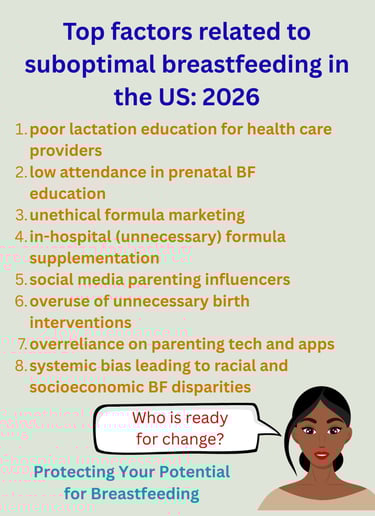
According to current research, 8 key factors influence breastfeeding in 2026:
• Insufficient breastfeeding education among healthcare professionals.
It is still not a core component of medical training.
• Low participation in prenatal breastfeeding classes.
• Unethical marketing of infant formula, influencing parents’ feeding decisions.
• Unnecessary formula supplementation in hospitals, disrupting early breastfeeding establishment.
• Misinformed advice from social media influencers, especially around “overpumping” and the pressure to build a large “freezer stash.”
• Excessive medical interventions during birth, which can interfere with early breastfeeding cues.
• Overreliance on apps and parenting technology, distancing parents from responsive feeding and from observing their baby’s cues.
• Systemic inequalities, leading to breastfeeding disparities based on race and socioeconomic status.
As healthcare professionals, we truly can make a difference.
We support breastfeeding with knowledge, empathy, and evidence-based care.