

Which Size of Fibroid Is Dangerous? Understanding Fibroid Sizes and Risks for Effective Patient Care
Uterine fibroids, also known as leiomyomas, are non-cancerous growths that can develop in the muscular wall of the uterus. Understanding the sizes of fibroids and their associated risks is crucial for effective patient care. This article will explore the classifications of fibroids, the symptoms they may cause, and the potential health risks linked to different sizes. By the end, readers will gain insights into when medical evaluation is necessary and the treatment options available based on fibroid size.
Indeed, uterine fibroids are a widespread concern, often leading to significant health challenges and a complex treatment landscape.
Uterine Fibroid Symptoms, Risks, and Treatment Options
Uterine fibroids (UFs) are the most common benign tumors of the myometrium, affecting up to 70% women by age 50. Although many cases remain asymptomatic, symptomatic UFs can significantly reduce quality of life through excessive bleeding, anemia, pelvic pain, infertility, and obstetric complications. Despite the availability of various conservative treatments — including pharmacotherapy, uterine artery embolization, and ultrasound thermoablation — surgical interventions, particularly hysterectomy, remain the dominant approach in many countries.
Uterine fibroids—why you should choose tailored therapies based on the joint decision of the physician and the patient, A Al-Hendy, 2025
What Are the Classifications and Measurements of Fibroid Sizes?
Fibroids can be classified based on their location within the uterus and their size. Understanding these classifications is essential for determining the appropriate management and treatment options.
How Are Fibroids Measured and Categorized by Size?
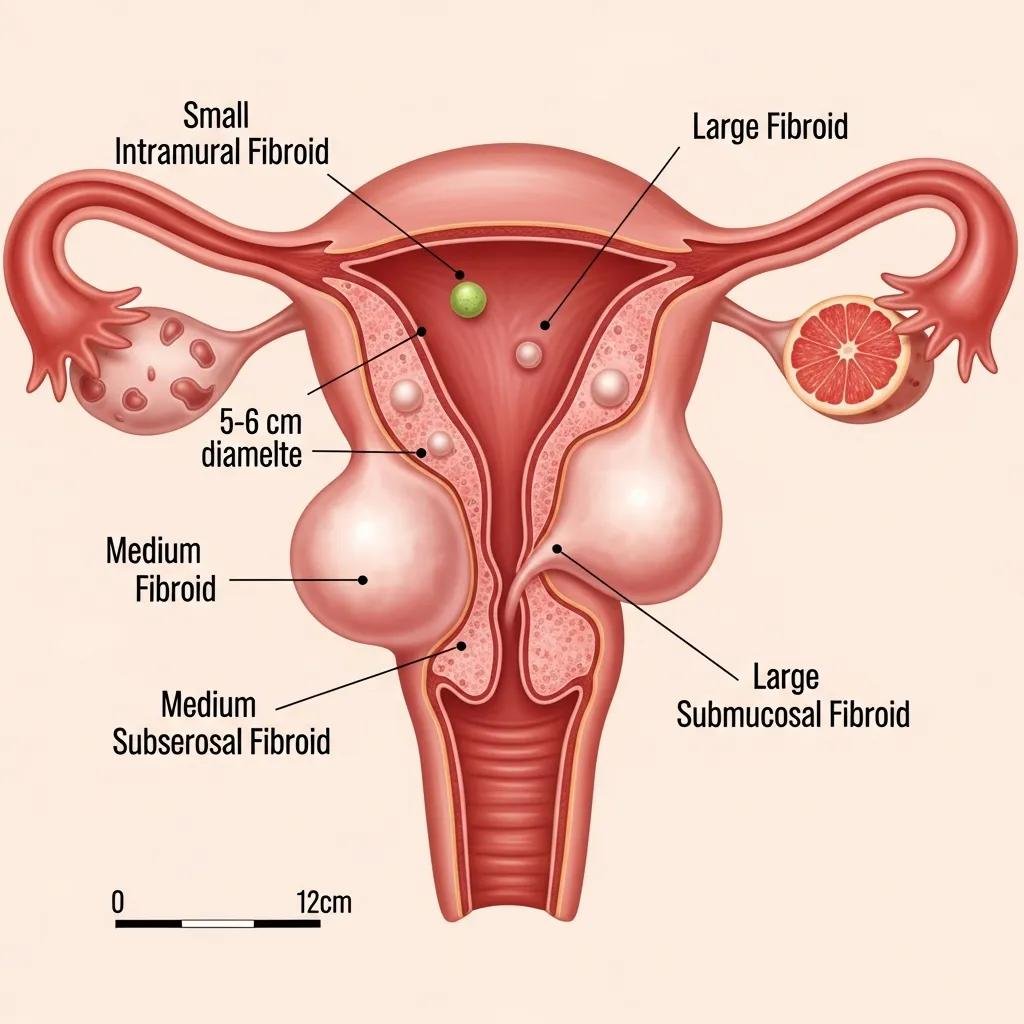
Fibroids are typically measured using pelvic ultrasound, which is the standard method for diagnosing and monitoring these growths. They can be categorized into several types based on their location:
- Intramural Fibroids: These grow within the muscular wall of the uterus.
- Subserosal Fibroids: These develop on the outer surface of the uterus.
- Submucosal Fibroids: These are located just beneath the inner lining of the uterus.
- Pedunculated Fibroids: These are attached to the uterus by a stalk.
Each type can vary significantly in size, which is a critical factor in determining treatment options.
What Size Thresholds Indicate Increased Health Risks?
The size of fibroids can indicate potential health risks. Generally, fibroids larger than 5 centimeters may lead to complications such as heavy menstrual bleeding, pelvic pain, and pressure symptoms. Larger fibroids are more likely to require medical intervention, making it essential for patients to be aware of these thresholds.
What Symptoms Are Associated with Different Fibroid Sizes?

Fibroid size can significantly influence the severity of symptoms experienced by individuals. Understanding these symptoms is vital for timely medical evaluation.
How Do Small, Medium, and Large Fibroids Affect Symptom Severity?
- Small Fibroids: Often asymptomatic and may go unnoticed during routine examinations.
- Medium Fibroids: Can cause noticeable symptoms such as increased menstrual bleeding and pelvic discomfort.
- Large Fibroids: Typically associated with severe symptoms, including significant pain, heavy bleeding, and potential fertility issues.
Recognizing these symptoms can help patients understand when to seek medical advice.
Which Symptoms Signal the Need for Medical Evaluation?
Certain symptoms warrant immediate medical evaluation, including:
- Heavy Menstrual Bleeding: This can lead to anemia and requires assessment.
- Pelvic Pressure or Pain: Persistent discomfort may indicate larger fibroids.
- Symptoms of Anemia: Fatigue and weakness due to excessive bleeding should not be ignored.
These symptoms highlight the importance of monitoring fibroid size and associated health impacts.
What Are the Risks and Complications Linked to Large Fibroids?
Large fibroids can pose significant health risks and complications that require careful management.
How Do Large Fibroids Impact Bleeding, Pain, and Fertility?
Large fibroids can lead to:
- Heavy Bleeding: This can result in anemia and other complications.
- Increased Pelvic Pain: Larger fibroids may cause pressure on surrounding organs.
- Fertility Issues: They can interfere with implantation and pregnancy, making it crucial for women trying to conceive to discuss fibroid management with their healthcare provider.
When Do Fibroid Sizes Warrant Surgical or Medical Intervention?
Surgical or medical intervention may be necessary when fibroids exceed certain size thresholds or when symptoms become unmanageable. Factors influencing the decision for intervention include:
- Size of the Fibroid: Generally, fibroids larger than 5 cm may require treatment.
- Severity of Symptoms: Persistent pain or heavy bleeding often necessitates action.
- Patient’s Reproductive Plans: Women considering pregnancy may need to address fibroids proactively.
What Diagnostic and Treatment Options Are Available Based on Fibroid Size?
Understanding the diagnostic and treatment options available based on fibroid size is essential for effective management.
Which Diagnostic Procedures Accurately Assess Fibroid Size and Risks?
Diagnostic procedures for assessing fibroids include:
- Pelvic Ultrasound: The primary tool for diagnosing and monitoring fibroids.
- MRI: Provides detailed images and can help in planning treatment.
These methods are crucial for accurately determining fibroid size and associated risks.
How Do Treatment Choices Vary with Fibroid Size and Patient Needs?
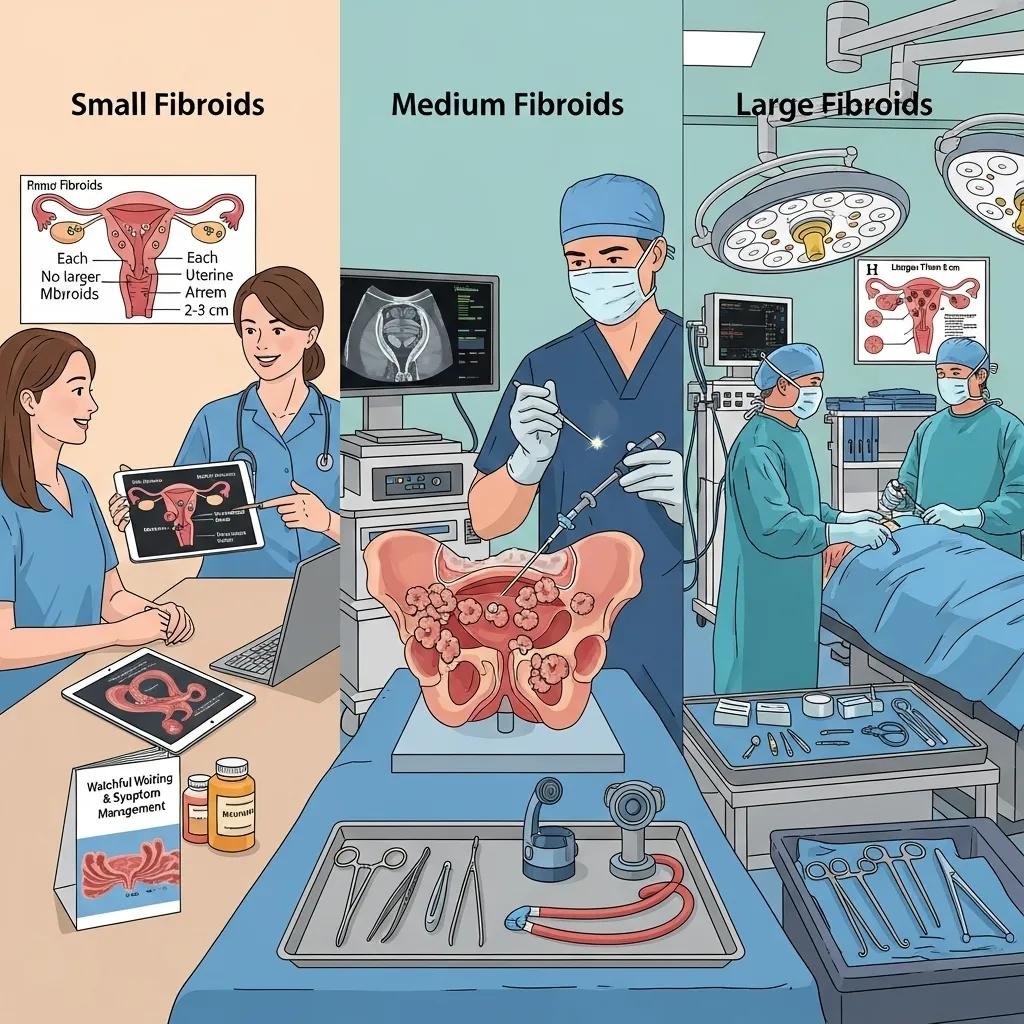
Treatment options vary significantly based on fibroid size and the patient’s individual needs. For small fibroids, a watchful waiting approach may be appropriate. In contrast, larger fibroids may require medical management or surgical options, such as myomectomy or hysterectomy, depending on the severity of symptoms and the patient’s reproductive goals.
This variability underscores the growing recognition that a personalized approach to fibroid management is essential for optimal patient outcomes.
Personalized Management for Uterine Fibroids
Uterine fibroids are the most common tumors of the female reproductive tract, affecting up to 80% of women. Despite their heavy burden and high prevalence, available medical treatment options are limited and are offered to patients assuming equal responsiveness. These benign tumors are complex, originating from potentially diverse pathobiologic processes, yet they are all managed in a rather standardized symptom-oriented approach that does not take into account the underlying processes. With our increasing understanding of the interplay between genes, epigenetics, individual’s lifestyle, and the environment in disease development, uterine fibroid management should be geared towards individualized preventive and treatment options.
The future of uterine fibroid management: a more preventive and personalized paradigm, M El Sabeh, 2021
AristoGP, a private healthcare provider based in Central London, specializes in private gynaecology and GP services. They offer expert consultations with female gynaecologists, providing personalized care for women seeking to understand their fibroid management options.
Different fibroid sizes present unique challenges and treatment pathways. Understanding these differences is essential for effective patient care.
| Fibroid Size | Symptoms | Recommended Action |
|---|---|---|
| Small (<5 cm) | Often asymptomatic | Monitor regularly |
| Medium (5-10 cm) | Increased bleeding, discomfort | Consider medical management |
| Large (>10 cm) | Severe pain, heavy bleeding | Surgical intervention may be necessary |
This table illustrates the varying symptoms and recommended actions based on fibroid size, emphasizing the importance of tailored treatment approaches.
In conclusion, understanding the size of fibroids and their associated risks is crucial for effective patient care. By recognizing the symptoms and knowing when to seek medical evaluation, individuals can make informed decisions about their health. For personalized care and expert consultations, AristoGP offers comprehensive services to address fibroid-related concerns.