
No single size makes a fibroid dangerous. A 2cm fibroid inside the uterine cavity can cause heavy periods and affect fertility. A 9cm fibroid on the outer wall may cause nothing at all. What matters most is where the fibroid sits, how quickly it has grown, and what symptoms it is producing. Size alone is not the deciding factor.
That said, size does predict risk. Fibroids larger than 5cm are more likely to cause symptoms. Those above 10cm carry a meaningful risk of complications if untreated. The chart below sets out what each size range means in practice.
Fibroid Size Chart: 1cm to 15cm
| Size | Classification | Typical Symptoms | Usual Approach |
|---|---|---|---|
| Under 1cm | Micro-fibroid | Almost always none | Annual ultrasound monitoring |
| 1 to 3cm | Small | Usually none; spotting if submucosal | 6 to 12 monthly monitoring |
| 3 to 5cm | Small to medium | Heavier periods; mild pelvic pressure | Monitor; treat if symptomatic |
| 5 to 7cm | Medium | Heavier periods; bloating; bladder pressure | Medical or procedural treatment often appropriate |
| 7 to 10cm | Medium to large | Significant bleeding; visible distension; frequent urination | Treatment usually recommended |
| 10 to 15cm | Large | Anaemia risk; abdominal swelling; bowel pressure | Surgical assessment usually required |
| Over 15cm | Very large | Organ compression; severe pain; high anaemia risk | Surgery typically required |
Does Location Matter More Than Size?
Yes, almost always. The position of a fibroid within the uterus determines symptoms far more reliably than diameter.
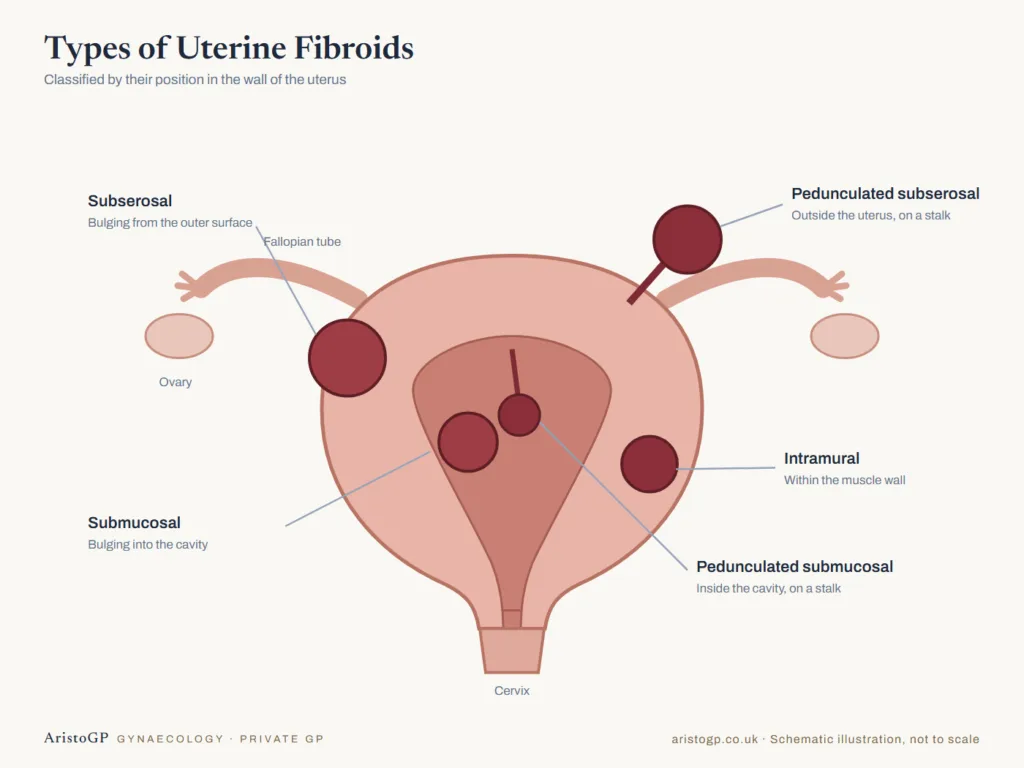
- Submucosal fibroids (inside the uterine cavity): Even at 1 to 2cm, these cause heavy bleeding and implantation difficulties. They are the type most likely to require treatment regardless of size.
- Intramural fibroids (within the muscle wall): Symptoms are generally proportional to size. A 5 to 6cm intramural fibroid produces heavier periods and pelvic fullness.
- Subserosal fibroids (on the outer surface): Can grow very large before causing noticeable symptoms. A 9 to 10cm subserosal fibroid may only become apparent as visible abdominal distension.
- Pedunculated fibroids (on a stalk): Carry a risk of torsion causing acute pain. Size influences how much torque is placed on the stalk.
What Does a Specific Fibroid Size Mean?
Is a 5cm Fibroid Dangerous?
A 5cm fibroid is at the threshold where symptoms become more likely, but it is not inherently dangerous. On the outer wall it may cause nothing. Inside the cavity at 5cm it can cause significant bleeding and pressure. At this size, most gynaecologists recommend monitoring every six months and a discussion of treatment if you are symptomatic or planning a pregnancy.
Is a 10cm Fibroid Dangerous?
A 10cm fibroid warrants surgical assessment regardless of symptoms. At this size fibroids press on the bladder and bowel, restrict blood flow, and become harder to remove if left to grow. Blood loss can cause anaemia. Most consultants recommend intervention before a 10cm fibroid grows larger.
Is a 12cm Fibroid Dangerous?
A 12cm fibroid is considered large and typically requires treatment. At this size the uterus is often enlarged to the equivalent of a 14 to 16 week pregnancy. Symptoms commonly include anaemia, visible abdominal swelling, bladder pressure and bowel pressure. Surgery is usually recommended. Medication such as GnRH analogues may be used first to shrink the fibroid and reduce surgical risk.
Is a 15cm Fibroid Dangerous?
A 15cm fibroid is very large and surgery is almost always required. The uterus at this size is equivalent in volume to approximately a 20-week pregnancy. Organ compression is common. Pre-operative medication is usually recommended to shrink the fibroid before surgery and reduce blood loss.
When Is a Fibroid Dangerous Regardless of Size?
- Rapid growth: A volume increase of 20% or more over 3 to 6 months warrants prompt investigation. Rapid growth is usually benign but raises the question of leiomyosarcoma, a rare malignant change affecting fewer than 1 in 1,000 fibroid diagnoses.
- Growth after the menopause: Fibroids normally shrink once oestrogen levels fall. Any growth in a postmenopausal woman requires urgent assessment.
- Submucosal position when trying to conceive: Hysteroscopic removal is typically recommended before assisted reproduction, regardless of fibroid size.
- Torsion: A pedunculated fibroid that twists on its stalk causes acute severe pain and requires emergency assessment.
Been told you have a fibroid? Dr Anastasia Mermigka, consultant gynaecologist, can assess its size, position and symptoms with a pelvic ultrasound in the same visit. Consultation with scan £300 in Central London EC1, no referral needed. Fibroid assessment in London
How Fibroids Are Measured
Pelvic ultrasound is the standard method. The report should give each fibroid three dimensions, its type (submucosal, intramural, subserosal, or pedunculated), and whether it is pressing on adjacent structures. If your report gives only a size, ask for the position as well, since that is what guides management.
At AristoGP we offer same-day pelvic ultrasound with consultant interpretation at our clinic near Chancery Lane, London EC1. You receive scan findings and a management plan in the same appointment. Book a private gynaecology consultation or see our gynaecology fees.
Frequently Asked Questions About Fibroid Size
Is a 5cm fibroid dangerous?
Not inherently. A 5cm fibroid on the outer wall may cause nothing at all, while a 2cm one inside the cavity can cause heavy bleeding and affect fertility. Position determines symptoms more reliably than diameter. A 5cm fibroid with symptoms, or in a woman trying to conceive, usually warrants treatment.
At what size does a fibroid need removing?
There is no single threshold. Treatment is decided by symptoms, location, effect on fertility, and rate of growth. A 12cm fibroid with no symptoms in a postmenopausal woman may simply be monitored. A 2cm submucosal fibroid in a woman with heavy periods and fertility concerns will often be removed.
Can a fibroid become cancerous?
Very rarely. Leiomyosarcoma affects fewer than 1 in 1,000 women with fibroids. It cannot be reliably distinguished from a benign fibroid on ultrasound alone, which is why rapid growth prompts MRI rather than routine review.
Should I worry if my fibroid is growing?
Growth before the menopause is common and usually benign. Rapid growth, or any growth after the menopause, warrants prompt assessment rather than waiting for the next routine scan.
Can a fibroid shrink on its own?
Fibroids commonly shrink after the menopause as oestrogen levels fall. Before the menopause, spontaneous shrinkage is uncommon. Hormonal medication can temporarily reduce fibroid size, but fibroids typically return to their previous size after treatment ends.
How are fibroids measured?
By pelvic ultrasound, in three dimensions, reported in centimetres or millimetres. The report should also state the position as that is what guides treatment more than size alone.
Find out exactly what your fibroid means
Size is only part of the picture. A consultation with pelvic ultrasound (£300) with consultant gynaecologist Dr Anastasia Mermigka maps the size, number and position of fibroids and explains your options the same day. Already been told you need a myomectomy or hysterectomy? A second opinion (£320) reviews your scans before you decide. No GP referral needed.
Book a scan and consultationGet a second opinion
AristoGP is a consultation and scanning clinic. We do not perform surgery, but Dr Mermigka can assess you, scan you in the same visit and explain your options, including whether surgery is actually needed.
Related care and reading
Get a clear answer on your fibroid size.