
A myomectomy removes fibroids and leaves the uterus in place. Recovery gets discussed; the changes afterwards often do not. This covers what tends to change, what takes longer than people expect, and what is worth raising with a doctor rather than waiting out.
Recovery depends on how the fibroids were removed
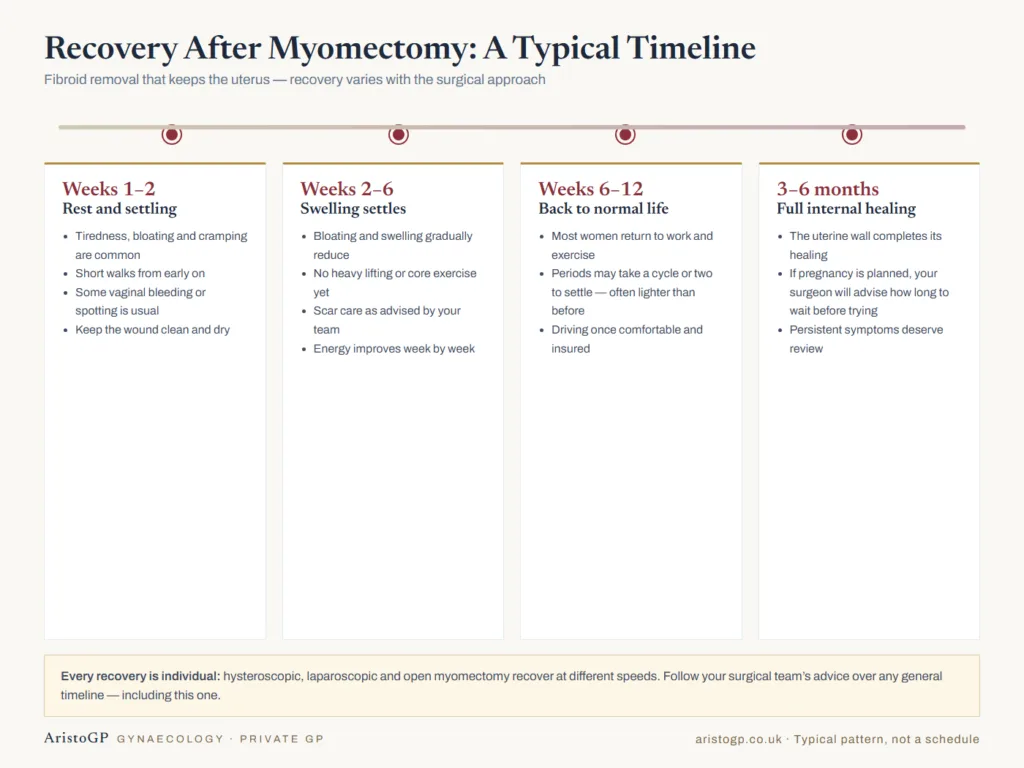
Three routes, and they are not comparable. A hysteroscopic myomectomy, done through the cervix with no incision, usually means a few days to a week. A laparoscopic myomectomy is typically two to four weeks to feel functional and around six weeks to normal activity. An open abdominal myomectomy involves a longer recovery, commonly six to eight weeks and sometimes longer, because the uterine wall has been cut and repaired.
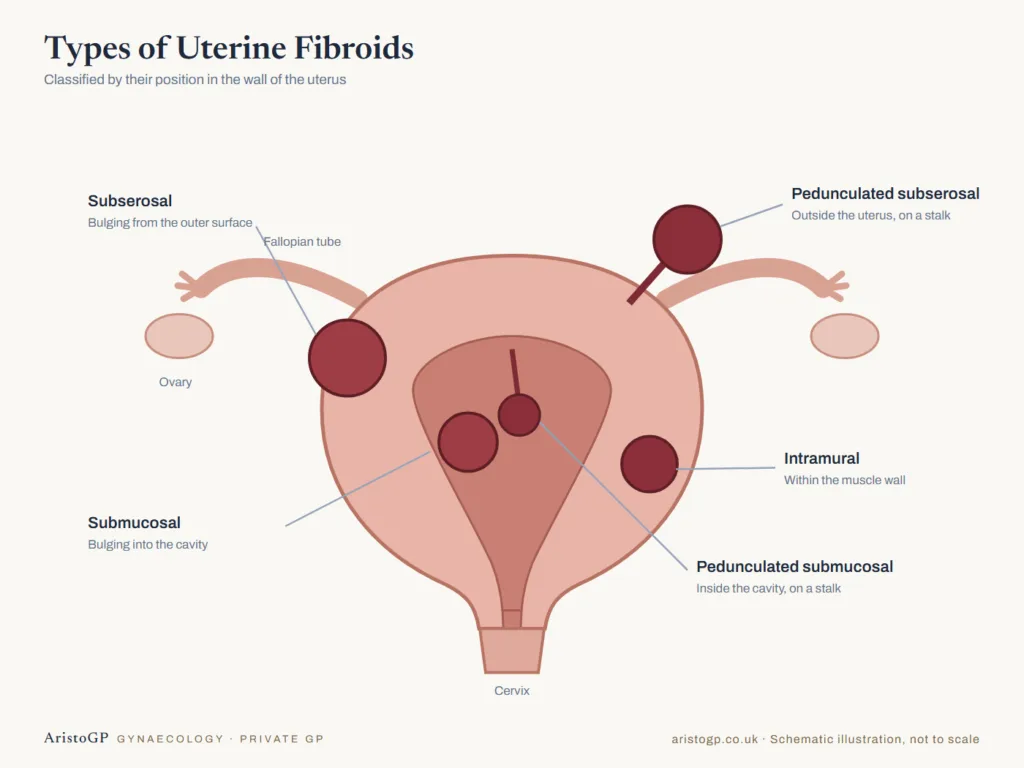
Fibroid number, size and depth matter as much as the approach. Removing one small fibroid and removing twelve are different operations with the same name.
Periods after a myomectomy
Where heavy bleeding was the reason for surgery, most women notice a clear improvement, often within the first two or three cycles. Cycle length can shift for a few months while the uterus heals.
When will my first period come after a myomectomy?
Most women have their first period four to six weeks after surgery, roughly when it would have been due anyway. After a hysteroscopic myomectomy it often comes on time. After laparoscopic or open surgery it can be a week or two early or late, because the operation, the anaesthetic and any hormone treatment given beforehand all affect the cycle. If you were given hormone injections to shrink the fibroids before surgery, periods can take two to three months to return.
If you have had no period eight weeks after surgery and you were not on pre-operative hormone treatment, do a pregnancy test and speak to your surgeon or a gynaecologist.
Is the first period after a myomectomy painful?
It often is. The first period can be heavier than usual, with more cramping and some clots, because the lining is shedding over a uterine wall that is still healing. This is common and does not mean the surgery has failed. Simple pain relief, as advised on discharge, usually helps. Soaking a pad every hour for more than two hours, or passing clots larger than a 50p coin, needs same-day advice.
The second and third periods
By the second or third cycle, bleeding usually settles into a new pattern, and for most women this is lighter and shorter than before surgery. If the third or fourth period is still as heavy as before the operation, that is worth reviewing rather than tolerating. A pelvic ultrasound can check whether a fibroid was left behind, a new one has formed, or another cause such as adenomyosis is involved.
Will my stomach be flat after fibroid removal?
Often flatter, but not straight away. Bloating after abdominal or laparoscopic surgery can persist for weeks from surgical fluid, trapped gas and healing tissue, and the uterus itself takes time to shrink back. Where large fibroids were removed, the change in your waist usually becomes visible over two to three months rather than immediately.
How flat depends on what was there before. Removing a 10cm fibroid that pushed the abdomen out makes a visible difference. Where fibroids were small, the shape of the stomach afterwards depends more on core muscle tone and weight than on the surgery. Gentle core exercise can usually start once your surgeon has cleared you, typically after six weeks for open surgery.
Myomectomy scar healing
The scar depends on the approach. A hysteroscopic myomectomy leaves no visible scar. A laparoscopic or robotic myomectomy usually leaves three or four small cuts of 0.5cm to 1.5cm, sometimes one slightly longer cut near the navel if fibroids were removed through it. An open myomectomy is usually done through a low horizontal cut along the bikini line, and occasionally an up-and-down (midline) cut when fibroids are very large.
The skin usually closes within about two weeks. For the first months the scar is often pink, slightly raised and firm, and it typically flattens and fades over twelve to eighteen months. Numbness or tingling around a lower abdominal scar is common, because small skin nerves are cut, and usually improves gradually over months.
There is also a scar inside, on the wall of the uterus, which you cannot see. It needs about three to six months to heal fully, which is why surgeons advise waiting before trying to conceive, and why the operation note matters if you become pregnant later.
Looking after the scar:
- Keep it clean and dry, and pat rather than rub it after showering
- Avoid heavy lifting and straining while it heals, usually for six weeks after open surgery
- Once the skin is fully closed, silicone gel or sheets and gentle massage can help the scar flatten
- Protect it from strong sun for the first year, as new scars darken easily
Get the wound checked if redness is spreading, it becomes hot, swollen or more painful, there is discharge or a bad smell, the edges open, a hard painful lump develops under it, or you have a temperature above 38°C.
Open myomectomy recovery week by week
Recovery from an open (abdominal) myomectomy is longer than from keyhole surgery. A typical pattern, which your surgeon's own advice always overrides:
- Days 1 to 3: usually in hospital for two to four nights. Walking a little on the first day helps prevent clots and eases trapped wind.
- Weeks 1 to 2: at home, tired, sore around the wound. Short walks several times a day, no lifting heavier than a kettle, no driving.
- Weeks 2 to 4: energy slowly returns. Light household tasks and longer walks. Still no heavy lifting, vacuuming or carrying shopping.
- Weeks 4 to 6: many women return to desk-based work around six weeks. Driving is usually possible once you can do an emergency stop without pain, but check with your insurer.
- Weeks 6 to 8: gradual return to exercise, lifting and sex, once cleared at follow-up.
- Around 3 months: the tiredness that most people underestimate is usually settling, and the abdomen has reached close to its final shape.
Physical jobs often need eight weeks or more. Feeling more tired than expected for two to three months is normal; feeling worse rather than better week on week is not, and needs checking.
Fertility and pregnancy
Preserving fertility is a common reason for choosing myomectomy over hysterectomy, and for many women it improves the chance of conceiving, particularly where fibroids were distorting the uterine cavity.
Two things need a specific conversation with your surgeon rather than a general answer. How long to wait before trying to conceive, which is often three to six months but depends on what was done. And whether the repair to the uterine wall means a caesarean is advised for future deliveries, which depends on whether the cavity was entered and how deep the incisions were. Your operation note holds that detail, and it matters years later.
Fibroids can come back
Myomectomy removes the fibroids present; it does not stop new ones forming. Recurrence is more likely when multiple fibroids were removed and when surgery happens well before menopause. Recurrence does not mean the operation failed, and returning symptoms deserve reassessment rather than resignation.
When to seek medical advice
- Heavy bleeding soaking a pad an hour, or large clots
- Fever above 38°C, or wound redness, swelling or discharge
- Calf pain or swelling, sudden breathlessness or chest pain, which need emergency assessment
- Severe or worsening pain rather than gradually settling discomfort
- Periods as heavy as before surgery after three or four cycles
- Difficulty conceiving twelve months after being cleared to try, or six months if you are over 35
Review after myomectomy
A pelvic ultrasound is the usual way to check healing, look for recurrence and assess the uterine cavity if you are planning pregnancy. At AristoGP the consultant performs the scan during the consultation, so findings are explained the same visit rather than waiting for a separate report.
1-5 Portpool Lane, London EC1N 7UU. Consultation £200, or £300 with pelvic ultrasound. No referral needed when self-paying. WhatsApp +44 7570 330555. Bring your operation note or discharge summary if you have one.
Common questions after a myomectomy
How long does recovery take?
It depends on how the fibroids were removed. Hysteroscopic removal usually means a few days. Laparoscopic or robotic surgery typically means two to four weeks. Open abdominal myomectomy is major surgery, with six weeks off work and a longer tail of fatigue than most people expect.
When will my periods go back to normal?
The first period usually arrives four to six weeks after surgery and is often heavier or more painful than usual, which does not mean the surgery failed. Most cycles settle within three months. Bleeding heavier than your pre-surgery normal after that point is worth reviewing.
Why is my stomach still swollen?
Abdominal swelling after myomectomy can persist for weeks from surgical fluid, trapped gas and healing tissue, and the uterus itself takes time to reduce. It is not a sign the fibroids have returned. Swelling that increases rather than settles, or comes with fever, should be assessed.
Can I get pregnant after a myomectomy?
Often yes, and improved fertility is a common reason for the operation. Most surgeons advise waiting three to six months before trying, depending on how deeply the uterine wall was entered. That same detail determines whether a caesarean will be recommended, so ask for it in writing.
Will the fibroids come back?
They can. Around one in four women develop new fibroids within five years, and the risk is higher when several were removed rather than one. Recurrence is new growth rather than the operation having failed, and not all new fibroids need treating.
Does removing fibroids affect my hormones?
No. A myomectomy removes the fibroids but leaves the uterus and ovaries in place, so it does not bring on the menopause or change how your hormones are produced. The first one or two cycles after surgery can be irregular because of the stress of the operation, and then they usually settle. Fibroids grow in response to oestrogen, which is why new ones can develop over time.
Is weight gain normal after a myomectomy?
The surgery itself does not cause fat gain. In the first weeks, any increase on the scales is usually fluid and swelling, together with being less active while you recover. If large fibroids were removed, your waist often becomes smaller once the swelling settles. Weight gain that continues months later is more likely to have another cause and is worth discussing with your doctor.
Is it normal to have pain six months after a myomectomy?
Most discomfort settles within 6 to 12 weeks, depending on how the surgery was done. Pain that is still present at six months is not expected. It can come from scar tissue (adhesions), nerve irritation around the scar, new fibroids, or a related condition such as adenomyosis or endometriosis. A consultation with a pelvic ultrasound can usually find the cause.
Recovering from a myomectomy in London? Book a follow-up consultation with scan at our Central London clinic.
Recovering from a myomectomy, or new symptoms months later?
See consultant gynaecologist Dr Anastasia Mermigka in Central London. A consultation with pelvic ultrasound (£300) checks how the uterus has healed and whether fibroids have returned, with results explained the same visit. Consultation only £200. No GP referral needed. If you have been advised to have further surgery, a second opinion (£320) reviews your scans and reports first.
Book a consultationAsk on WhatsApp
AristoGP is a consultation and scanning clinic. We do not perform surgery, but Dr Mermigka can assess you, scan you in the same visit and explain your options, including whether surgery is actually needed.
Related care and reading
Questions about your recovery? Book a consultation or message us.