
Consultant gynaecology · Central London EC1
Fibroid Treatment in London
Assessment and management of uterine fibroids by a consultant gynaecologist, with pelvic ultrasound performed during your consultation so the size, number and position are known the same day.
Fibroids are common and often harmless. What matters is whether yours explain your symptoms, which needs imaging and a clinician who can interpret it in front of you.
Consultant-led · Same-visit pelvic ultrasound · From £200
What to expect
Assessment, imaging and a plan in one visit
Diagnosis by ultrasound
Transvaginal and transabdominal imaging to locate and measure fibroids during your visit.
Symptom assessment
Heavy bleeding, pelvic pressure, pain or urinary symptoms reviewed against the imaging findings.
Treatment discussion
Medical options, and when referral for surgical treatment is appropriate.
Monitoring
Follow-up imaging where watchful waiting is the right approach.
Fertility considerations
Discussion of whether fibroids are likely to affect conception or pregnancy.
Onward referral
Written referral to a surgical specialist where that is the right next step.
Fees
Published fees
Gynaecology Consultation
Full consultant consultation
£200
Consultation + Pelvic Ultrasound
Same-day scan and results
£300
Complete Well Woman Check
Consultation, ultrasound and cervical screening
£380
Common questions
Fibroids: what patients ask
What symptoms do fibroids cause?
Heavy or prolonged periods, pelvic pressure or a feeling of fullness, needing to pass urine more often, pain during sex and sometimes lower back ache. Many fibroids cause no symptoms at all and are found incidentally on a scan done for another reason.
Do all fibroids need treating?
No. A fibroid that is not causing symptoms and is not growing usually needs monitoring rather than treatment. The decision rests on your symptoms, the size and position of the fibroid and whether you are planning a pregnancy, not on the existence of the fibroid alone.
Does position matter more than size?
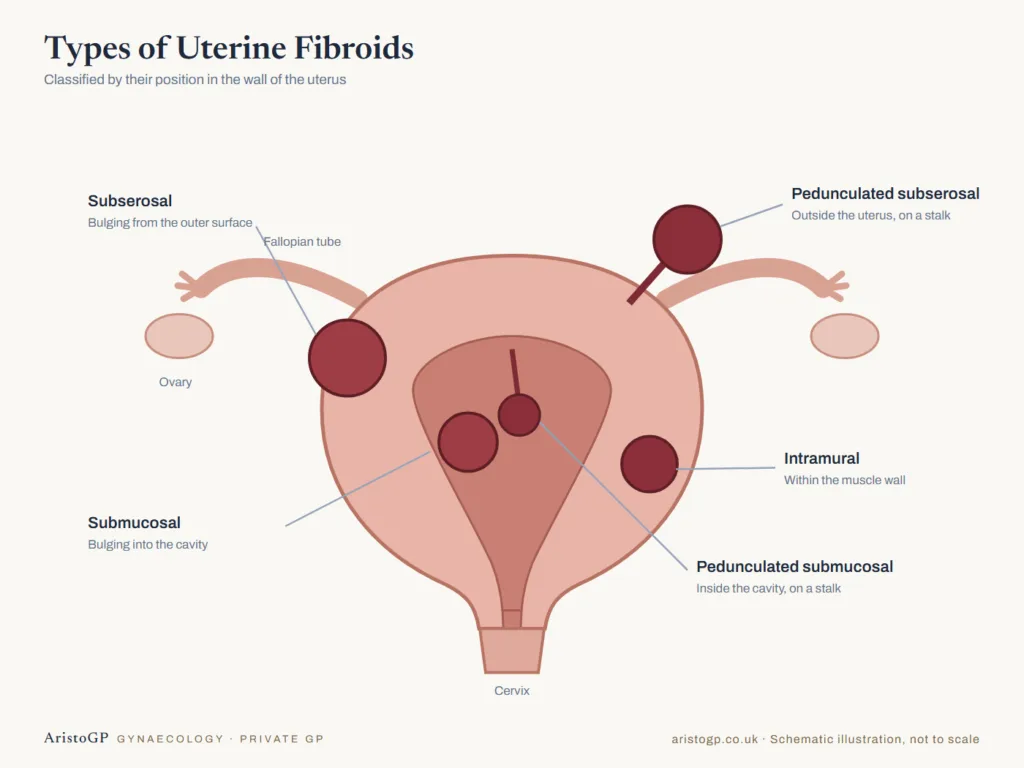
Often, yes. A small fibroid distorting the cavity of the womb can cause heavier bleeding and more difficulty conceiving than a considerably larger one sitting on the outer wall. That is why imaging which locates the fibroid matters, rather than a measurement on its own.
Can fibroids affect fertility or pregnancy?
Most do not. Those pressing into the uterine cavity can interfere with implantation, and large fibroids occasionally affect the position of the baby later in pregnancy. If you are trying to conceive, that is worth discussing specifically rather than assuming it either way.
What treatments are available?
Options range from medication to control bleeding, through a hormonal coil, to surgical treatment such as myomectomy or uterine artery embolisation. AristoGP assesses, explains the options and refers for surgical treatment where that is the right step. The procedures themselves are carried out in hospital.
Do fibroids shrink after the menopause?
Usually. Fibroids depend on oestrogen, so they commonly shrink and cause fewer symptoms after the menopause. A fibroid that grows after the menopause is less typical and should be assessed rather than watched.
Book a consultant gynaecologist
Same-day appointments at 1-5 Portpool Lane, with same-day pelvic ultrasound where clinically appropriate.