

A cervical screening result that says HPV positive, cytology negative (or “HPV found, no abnormal cells”) means the test found one of the high-risk types of human papillomavirus, but the cells from your cervix looked normal under the microscope.
It is one of the most common results in screening, and it is not a cancer diagnosis or a sign that something is wrong with your cervix now. It means you are monitored a little more closely while your immune system clears the virus, which it usually does.
What the result means
Cervical screening in the UK tests for high-risk HPV first. Only if HPV is found are the cells examined (cytology). Your result tells you two things:
- HPV positive: you have a high-risk HPV infection at the moment. These types can, over many years, cause cell changes that may develop into cervical cancer if they are never treated.
- Cytology negative: there are no abnormal cells now. Nothing needs treating.
HPV is extremely common. Most sexually active people have it at some point, usually without knowing, and in most people the body clears it within one to two years.
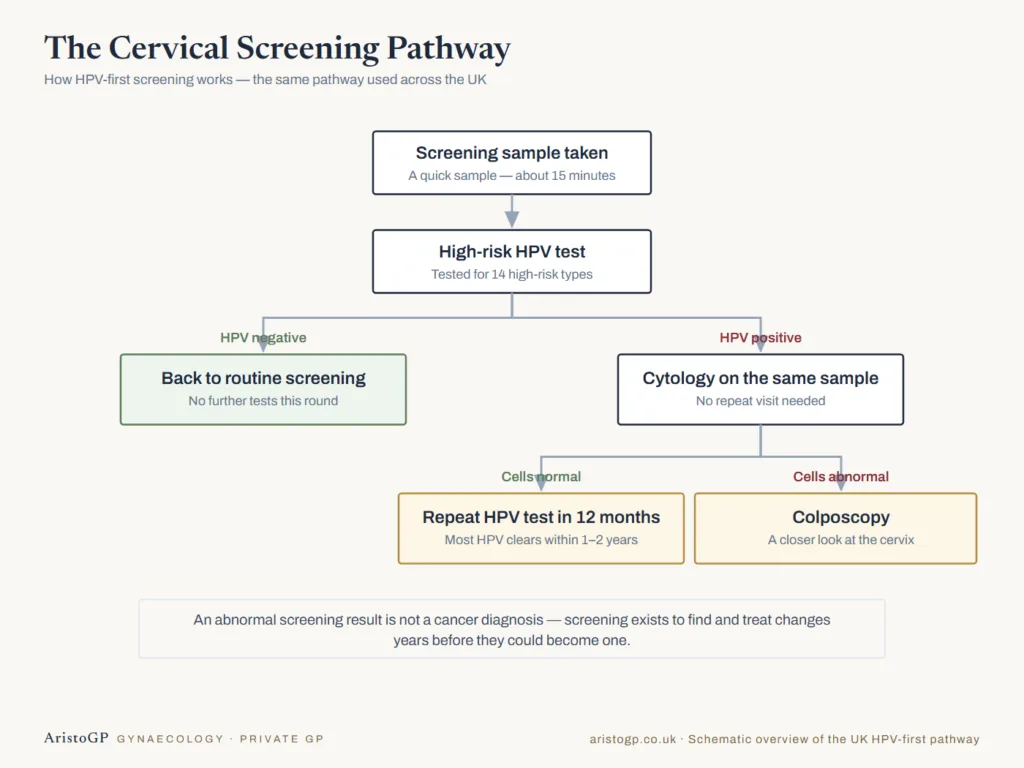
What happens next on the NHS
In England, the screening pathway for this result is:
- Repeat test in 12 months. You are invited back after a year instead of the usual five.
- HPV gone at 12 months: you return to routine screening.
- Still HPV positive, cells still normal: you are invited back after another 12 months.
- HPV positive for a third time in a row (at about 24 months): you are referred for colposcopy, even if the cells are still normal.
- Abnormal cells at any repeat test: you are referred for colposcopy.
Colposcopy is a closer look at the cervix with a magnifying instrument, usually in a hospital clinic. It does not mean you have cancer. It lets a specialist check for changes that the smear sample might miss.
Why wait 12 months?
Because the virus needs time to clear. Testing again after a few weeks or months will very probably still be positive and will only cause worry. Twelve months gives most people’s immune system the time it needs, and because the cells were normal, waiting is safe.
If you are tempted to have a private test early, it is usually better not to. A repeat test at around 12 months, privately or on the NHS, gives a result that means something.
Does it mean my partner has been unfaithful?
No. HPV can stay in the body, undetectable, for many years before showing up on a test. A positive result now does not tell you when or from whom you got it, and it can appear in long, monogamous relationships. There is no routine HPV test for men, and your partner does not need to do anything. Our article My Partner Has HPV covers this in more detail.
What you can do in the meantime
- Stop smoking if you smoke. Smoking makes it harder for the body to clear HPV, and stopping is the most useful single thing you can do.
- Go to your repeat test. The pathway only works if you attend.
- Use condoms if you wish. They reduce, but do not completely prevent, HPV transmission.
- Do not ignore symptoms. Bleeding after sex, bleeding between periods or after the menopause, or unusual discharge should be checked now, not at your next screening.
There is no medicine that clears HPV. Supplements and special diets are often promoted for this, but there is no good evidence that they work.
Seeing a consultant privately
Some people want to talk the result through, have their repeat test at a time that suits them, or have HPV and cytology reported together at the next test. At AristoGP, consultant gynaecologist Dr Anastasia Mermigka can:
- Take your repeat HPV test at 12 months (£150, cytology included if HPV is still present)
- Report HPV and cytology together if you prefer (£230)
- See you for a consultation (£200) if you have symptoms or questions
If a test shows abnormal cells, or HPV persists for long enough to need colposcopy, we refer you on. AristoGP does not perform colposcopy itself.
Frequently asked questions
Is HPV positive with normal cytology serious?
Usually not. It means the virus is present but the cells are normal. Most HPV infections clear within one to two years, which is why you are retested after 12 months rather than treated.
How long does it take for HPV to clear?
For most people, between a few months and two years. That is why the NHS retests after 12 months and again after 24 months before referring for colposcopy.
Will I need colposcopy if I am HPV positive with normal cells?
Not straight away. You are referred if abnormal cells appear at a repeat test, or if HPV is still present at the third test in a row, about two years after the first result.
Should I have another test sooner than 12 months?
Usually not. An early repeat test is likely to still be positive because the virus has not had time to clear, and it will not change what happens next.
Can I still have sex if I am HPV positive?
Yes. HPV is very common and your partner has very likely already been exposed. Condoms reduce transmission but do not remove it completely.
Related care and reading
Book a repeat test or a consultation.