
Most of the advice written for partners after a hysterectomy is vague. This is the practical version: what the recovery actually involves week by week, what help is genuinely useful, and the symptoms that mean you should stop waiting and call someone.
The recovery is longer than the discharge letter suggests
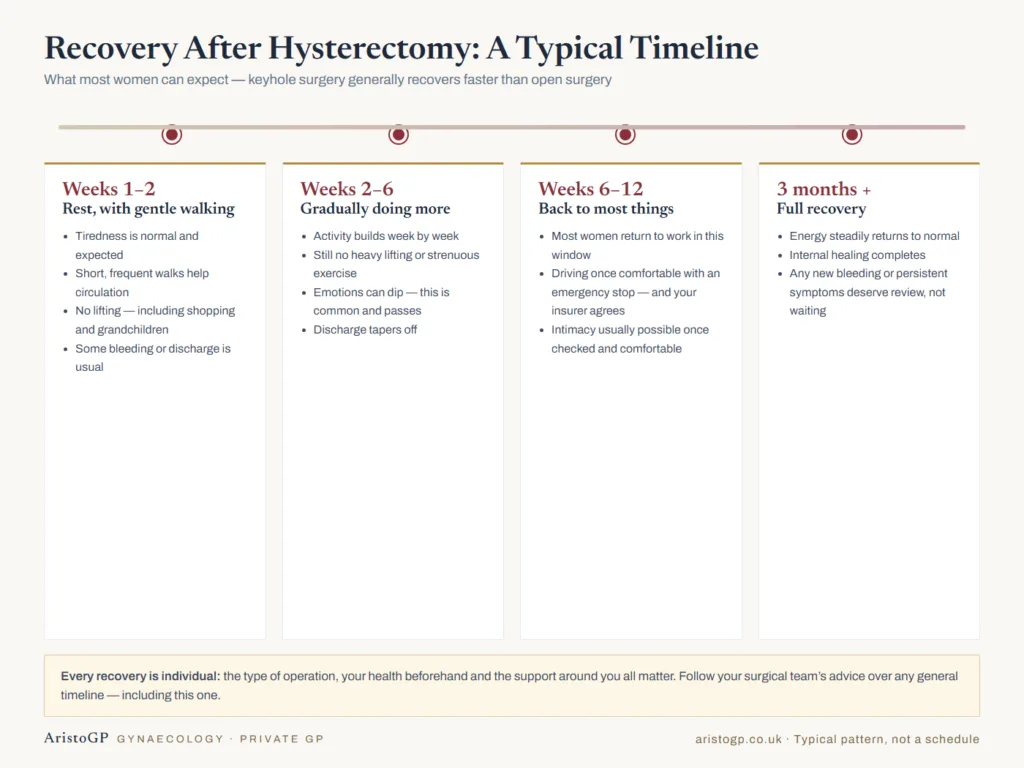
A laparoscopic or vaginal hysterectomy usually means two to four weeks before someone feels reasonably functional, and six to eight weeks before normal activity. An abdominal hysterectomy is longer, typically six to twelve weeks. Those figures describe tissue healing. Energy takes longer, and fatigue is the symptom partners most often underestimate.
If the ovaries were removed as well, menopause begins immediately rather than gradually. Hot flushes, disrupted sleep and mood changes can start within days. That is surgical menopause, it is more abrupt than the natural kind, and it is treatable. It is worth knowing in advance whether the ovaries were removed, because it changes what the next few months look like.
The first two weeks
- Take over lifting entirely. Nothing heavier than a full kettle. This includes children, shopping, laundry baskets and the vacuum cleaner. Lifting restrictions exist to protect internal healing, not because of pain.
- Expect short walks, several times a day. Walking reduces clot risk and is actively encouraged. Sitting still all day is not rest, it is a risk.
- Manage the painkillers by the clock. Pain relief works better taken on schedule than chased once pain has built. Constipation from codeine is common and miserable after abdominal surgery; ask the pharmacist about a stool softener early.
- Do not expect conversation. Anaesthetic, disrupted sleep and pain medication leave most people foggy for a week or two.
Weeks three to six
This is where the frustration usually starts. Someone who feels better in themselves is still under lifting and driving restrictions, and the mismatch is difficult. Driving usually resumes at around four weeks, but the test is being able to perform an emergency stop without hesitation, and insurers may have their own conditions. Returning to work depends far more on the job than the calendar: a desk job at four to six weeks, physical work considerably later.
Vaginal bleeding or discharge for up to six weeks is normal. Nothing in the vagina during that time, meaning no tampons, no sex, no swimming, until the six-week review confirms healing.
Sex, and the conversation nobody has
Six weeks is the usual guidance before resuming sex, and readiness is rarely just physical. Some women feel differently about their body after a hysterectomy. Some feel enormous relief, particularly after years of heavy bleeding or pain. Both are normal, and neither is predictable in advance.
If the ovaries were removed, vaginal dryness and reduced libido are common and physiological rather than a verdict on the relationship. They are also treatable, with vaginal oestrogen and, where appropriate, HRT. This is worth raising at the follow-up rather than living with quietly. It is one of the most common things patients say afterwards they wish they had mentioned sooner.
When to seek help rather than wait
Contact the surgical team, your GP, or NHS 111 promptly if you notice:
- Heavy vaginal bleeding, soaking a pad in an hour, or passing large clots
- A temperature above 38°C, or wound redness, swelling or discharge
- Calf pain, swelling or warmth in one leg, or sudden breathlessness or chest pain, which need emergency assessment
- Severe or worsening abdominal pain rather than gradually improving discomfort
- Inability to pass urine, burning on passing urine, or no bowel movement with a bloated painful abdomen
- Foul-smelling discharge
Sudden breathlessness, chest pain or one swollen calf should be treated as an emergency. Do not wait for the follow-up appointment.
The part that is harder to name
For some women a hysterectomy carries a sense of loss, particularly if it was not planned or if it ends the possibility of pregnancy. For others it is the end of years of pain. Low mood in the weeks afterwards is common, and if the ovaries were removed the hormonal drop contributes to it directly. Low mood that persists beyond a few weeks, or that comes with hopelessness, is worth a GP appointment rather than time.
What tends to help is unglamorous: taking over the logistics without being asked, not treating slow days as setbacks, and asking how she is rather than how the recovery is going.
Follow-up care in London
If you would like a review after surgery, or a discussion about hormonal symptoms following removal of the ovaries, AristoGP offers consultant gynaecology appointments at 1-5 Portpool Lane, London EC1N 7UU. A consultation is £200, or £300 with a pelvic ultrasound in the same visit. No referral is needed if you are self-paying. WhatsApp +44 7570 330555.
If your surgery was on the NHS, your surgical team remains the right first point of contact for anything related to the operation itself.
Common questions from partners
How long before she can lift things again?
Nothing heavier than a full kettle for the first two weeks, and no heavy lifting for six. That includes children, shopping and laundry baskets. Lifting too early risks the internal repair rather than just causing pain, and the internal healing is well behind how she looks.
When can we have sex again?
Six weeks is the standard guidance, and it is not arbitrary: the vaginal vault needs that long to heal. Even then, discomfort or dryness is common at first, particularly if the ovaries were removed. There is no rush, and pain is a reason to stop and ask rather than persevere.
Is she going to go through the menopause now?
Only if both ovaries were removed. A hysterectomy that leaves the ovaries in place does not cause immediate menopause, though periods stop. If the ovaries were removed and she is premenopausal, menopausal symptoms can begin within days and HRT is worth discussing early.
What symptoms mean I should call someone tonight?
Heavy vaginal bleeding, a fever, a calf that is hot, swollen or painful, sudden breathlessness or chest pain, or a wound that is hot, spreading or discharging. Calf pain and breathlessness are the ones people wait on, and those are the ones that should not wait.
She seems low. Is that normal?
Common, and not a complication. Anaesthetic, disturbed sleep, pain and the meaning of the surgery itself all contribute, and it is often worse in weeks two to four when the initial focus has passed. Persistent low mood beyond a few weeks deserves a GP appointment rather than patience.
Does she have questions about her recovery?
A private consultation with Dr Anastasia Mermigka (£200) covers recovery concerns, menopause symptoms after surgery and HRT. Add a pelvic ultrasound for £300 in total. If a hysterectomy has been recommended and she wants to understand the alternatives first, a second opinion (£320) reviews her scans and reports. No GP referral needed.
Book a consultationAsk on WhatsApp
AristoGP is a consultation and scanning clinic. We do not perform surgery, but Dr Mermigka can assess you, scan you in the same visit and explain your options, including whether surgery is actually needed.
Related care and reading
Book a review with a consultant gynaecologist.