
Being told you have fibroids often comes with the word “surgery” soon after. In reality, many fibroids never need an operation. Whether you need treatment at all, and which kind, depends far more on your symptoms, where the fibroids are and your plans for pregnancy than on their size.
This guide sets out the options, from doing nothing to hysterectomy, so you can have a better-informed conversation with your doctor.
Do fibroids always need treatment?
No. Fibroids are non-cancerous growths of the muscle of the uterus and are very common. Many cause no symptoms and are found by chance on a scan. If yours are not causing problems, the usual advice is to leave them alone and keep an eye on any symptoms.
Fibroids depend on oestrogen, so they usually shrink after the menopause. If you are in your late 40s with manageable symptoms, waiting can be a sensible choice.
What decides the right treatment
- Your symptoms: heavy periods, anaemia, pain, pressure on the bladder or bowel, or a swollen abdomen
- Where the fibroids are: fibroids inside the cavity (submucosal) cause more bleeding and fertility problems than those within the wall (intramural) or on the outside (subserosal)
- Size and number: these matter mostly for which procedure is possible, not whether treatment is needed
- Whether you want to become pregnant
- How close you are to the menopause
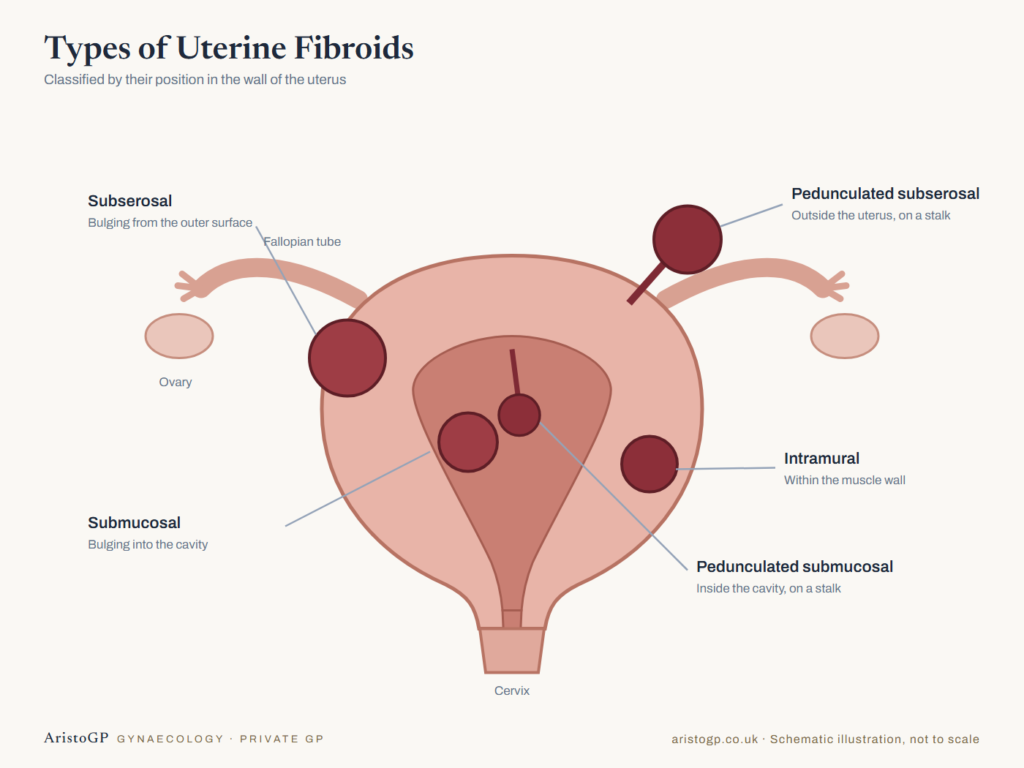
A pelvic ultrasound is the usual way to map this. Without knowing exactly where each fibroid is, it is hard to choose between treatments.
Treatments that control bleeding
These do not shrink fibroids, but they can make periods much lighter and are often tried first when heavy bleeding is the main problem:
- Tranexamic acid, taken only on heavy days, reduces bleeding
- Anti-inflammatory painkillers such as mefenamic acid reduce bleeding and period pain
- The hormonal coil (levonorgestrel IUS), useful when fibroids do not distort the uterine cavity
- The combined pill or progestogen tablets, which can regulate and lighten periods
If iron levels are low, treating the anaemia matters as much as treating the bleeding.
Medicines that shrink fibroids
- GnRH analogue injections switch off oestrogen production and shrink fibroids, but cause menopause-like symptoms. They are usually used for a few months, often before surgery to make the operation easier.
- Relugolix combination therapy is a daily tablet that lowers oestrogen and includes hormone add-back to limit menopausal side effects. NICE recommends it for moderate to severe fibroid symptoms, and it can be used for longer.
Fibroids usually grow back once these medicines stop, so they are a bridge or a way of managing symptoms rather than a permanent fix.
Procedures without major surgery
- Uterine artery embolisation (UAE): a radiologist blocks the blood supply to the fibroids through a small tube in the groin or wrist. The fibroids shrink over months. You usually go home the next day.
- Radiofrequency ablation: heat destroys fibroid tissue through keyhole surgery or through the cervix.
- MRI-guided focused ultrasound: ultrasound energy heats the fibroid without any incision. It is suitable for a limited number of fibroids and is only available in a few centres.
These keep the uterus, but the evidence on pregnancy afterwards is more limited than for myomectomy, so they are usually better suited to women who are not planning a pregnancy.
Surgery: myomectomy and hysterectomy
- Hysteroscopic resection removes fibroids inside the cavity through the cervix, with no cut on the abdomen. Recovery is usually a few days.
- Myomectomy removes fibroids and keeps the uterus, by keyhole or open surgery. It is the main surgical option if you want to become pregnant. Fibroids can come back. Our guide to body changes after myomectomy covers recovery.
- Hysterectomy removes the uterus. It is the only treatment that stops fibroids returning, but it ends periods and pregnancy. Keeping the ovaries avoids an early menopause.
The options at a glance
| Option | Usually suits | Keeps fertility? | Typical recovery |
|---|---|---|---|
| Watch and wait | No or mild symptoms, close to menopause | Yes | None |
| Bleeding treatments | Heavy periods as the main problem | Yes (while not using hormonal contraception) | None |
| Shrinking medicines | Symptom control, or before surgery | Yes | None |
| Embolisation or ablation | Symptoms, not planning pregnancy | Uncertain | Days to 2 weeks |
| Hysteroscopic resection | Fibroids inside the cavity | Yes | A few days |
| Myomectomy | Symptoms and wanting pregnancy | Yes | 2 to 8 weeks |
| Hysterectomy | Severe symptoms, family complete | No | 2 to 8 weeks |
Recovery times vary with the approach and the individual. Your surgeon’s advice always takes priority.
When surgery is usually worth considering
- Heavy bleeding or anaemia that medication has not controlled
- Pressure symptoms from large fibroids, such as needing to pass urine often
- A fibroid inside the cavity in someone trying to conceive or having IVF
- Symptoms that are seriously affecting work or daily life
Even then, there is usually more than one reasonable choice. If you have been offered a hysterectomy and want to keep your uterus, or offered surgery you are not sure you need, it is reasonable to ask about the alternatives or get a second opinion.
Questions to ask before agreeing to surgery
- Where exactly are my fibroids, and which one is causing my symptoms?
- What happens if I do nothing for now?
- Which non-surgical options have we not tried, and why?
- Will this operation affect my chances of pregnancy, or mean a caesarean later?
- Keyhole or open surgery, and what is the recovery?
- How likely is it that the fibroids will come back?
How AristoGP can help
AristoGP is a consultation and scanning clinic. We do not perform surgery or embolisation. What consultant gynaecologist Dr Anastasia Mermigka can do is work out what your fibroids are actually doing and explain your options in plain language, with no stake in which you choose:
- Consultation with pelvic ultrasound (£300): the size, number and position of your fibroids, scanned and explained in the same visit
- Second opinion (£320): an independent review of your scans, reports and the treatment you have been offered, before you decide
- Consultation only (£200) if you already have a recent scan
You leave with a written summary you can take to your GP or surgeon. No GP referral is needed. See our fibroid assessment page for more.
Frequently asked questions
Can fibroids be treated without surgery?
Often, yes. Bleeding can be controlled with tranexamic acid, anti-inflammatory painkillers, the hormonal coil or hormone tablets. Fibroids can be shrunk with GnRH medicines, and procedures such as uterine artery embolisation treat fibroids without major surgery.
What size of fibroid needs surgery?
There is no single size. Position and symptoms matter more. A small fibroid inside the uterine cavity may need removing, while a large one on the outside that causes no symptoms may not.
Do fibroids go away on their own?
They do not usually disappear before the menopause, but they often stop growing, and they usually shrink after the menopause when oestrogen levels fall.
Is myomectomy or hysterectomy better?
It depends on your goals. Myomectomy keeps the uterus and the possibility of pregnancy, but fibroids can come back. Hysterectomy stops fibroids returning but ends periods and pregnancy.
Should I get a second opinion before fibroid surgery?
It is reasonable if you are unsure the operation is needed, want to keep your uterus, or have not been offered alternatives. A second opinion reviews your scans and the options before you decide.
Related care and reading
Get a clear answer before you decide.